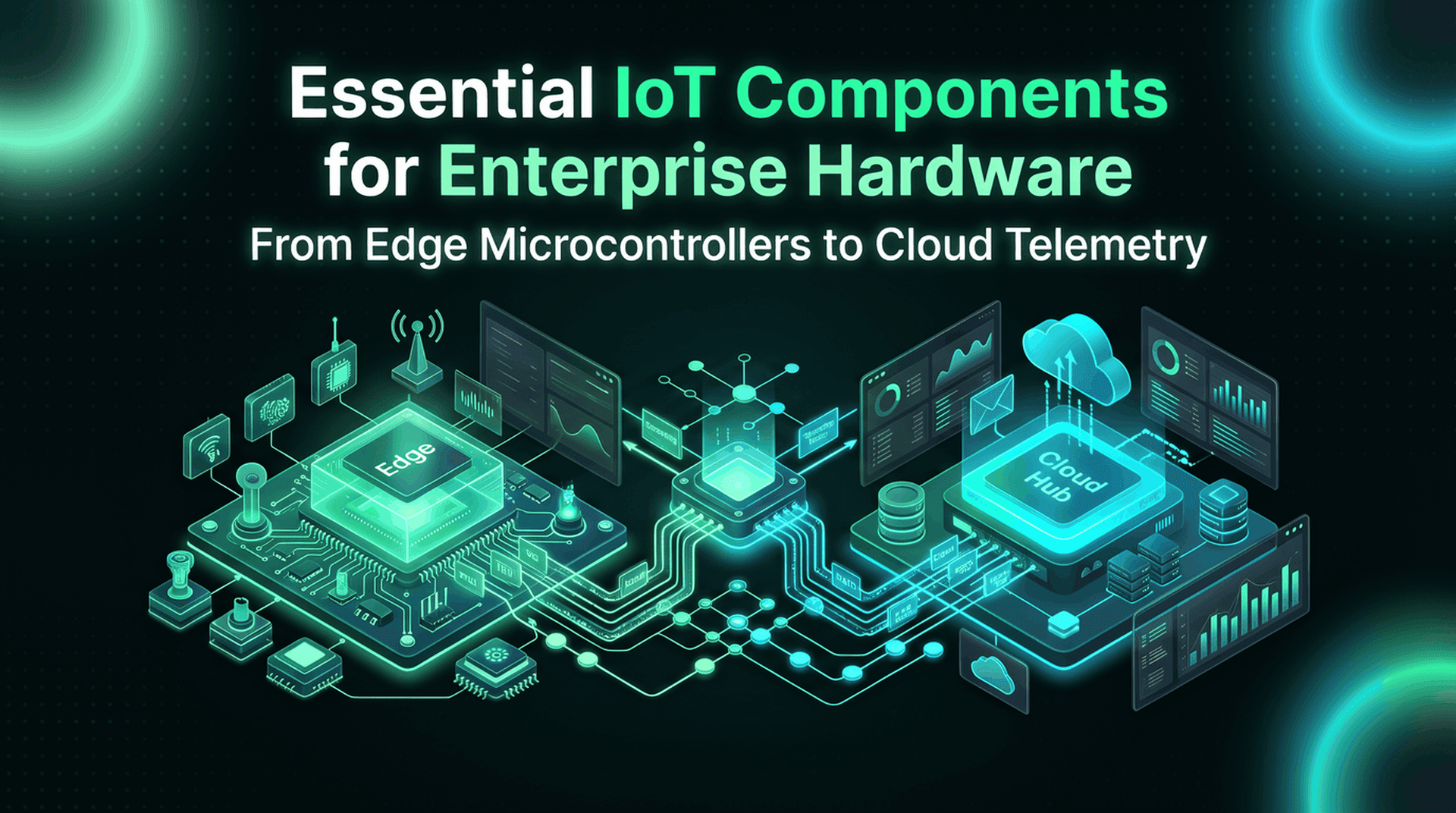
The Building Blocks of Connected Enterprise Architecture
Behind every intelligent smart device, automated factory floor, or connected logistics tracker lies a carefully balanced ecosystem of hardware components. Developing resilient Internet of Things (IoT) hardware requires selecting components that balance processing capability, power consumption, network bandwidth, and industrial durability. At FlutterFlirt, our IoT engineering services guide enterprises from breadboard prototyping to mass manufacturing and cloud integration.
Core Processing Nodes: ESP32 vs Raspberry Pi vs STM32
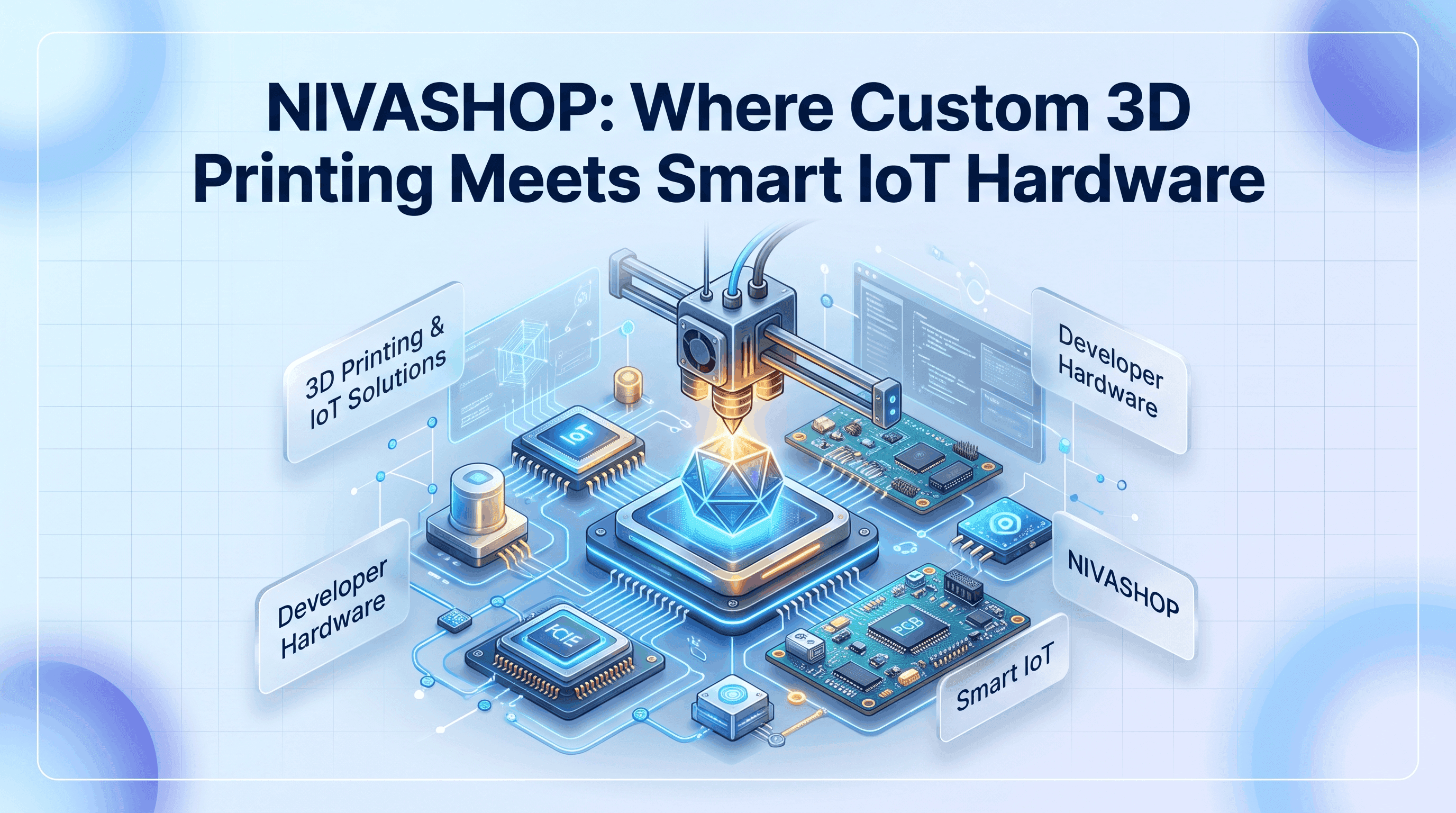
At the core of any edge system is the processing unit. For lightweight, power-efficient wireless sensor nodes, Espressif’s ESP32 family (including ESP32-S3 and the Matter/Wi-Fi 6 capable ESP32-C6) provides an optimal price-to-performance ratio. For intensive local edge analytics, vision processing, or local gateway aggregation, single-board computers like the Raspberry Pi 5 provide high-throughput Linux execution. FlutterFlirt develops custom firmware (C++, FreeRTOS, MicroPython) tailored to optimize battery longevity and cryptographic security.
Sensors, Actuators, and Communication Protocols
Connected systems rely on environmental inputs and mechanical outputs. Precision sensors capture telemetry including ambient temperature/humidity (I2C/SPI), particulate air quality (PM2.5/PM10), vibration, current/power draw (CT sensors), and liquid levels. Relay modules and solid-state switches serve as actuators. For connectivity, modern architectures employ dual-layer wireless networks: low-power Zigbee 3.0 or BLE for localized cluster mesh nodes, and Wi-Fi / 4G LTE cellular for gateway uplink to Azure IoT Hub.
Enclosures, Rapid Prototyping, and ERP Integration
Hardware components require structural protection. Utilizing custom 3D-printed enclosures and thermal-dissipating casings, engineers can rapidly validate ergonomic form-factors before cutting high-volume injection molds. Furthermore, FlutterFlirt bridges edge telemetry directly with enterprise business systems: telemetry collected by hardware devices streams into PostgreSQL, Azure Cosmos DB, and Microsoft Dynamics 365 ERP, automating asset lifecycles from the circuit board up.

FlutterFlirt Team
Consulting & Technology team